


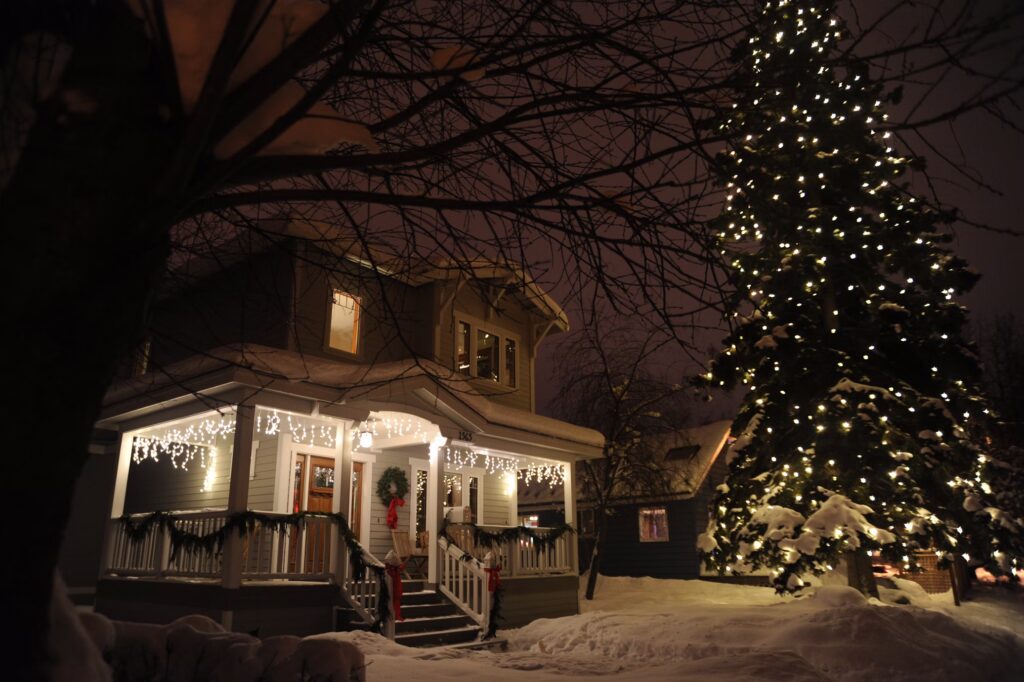
Do LED Christmas lights get hot? It’s a common question and an important one as the holiday season approaches and homes begin to glow with festive decoration. While it’s true that LED lights produce some heat during operation, they remain much cooler than traditional options like incandescent Christmas lights.
This lower temperature makes them a safer and more energy-efficient option for both indoor and outdoor decorating, though that doesn’t mean they’re entirely without risk.
In this post, we’ll explain how LED Christmas lights generate heat, how they compare to older lighting technologies, and the situations in which they might still pose a hazard. We’ll also cover key safety tips and why hiring experienced professionals, can make all the difference in ensuring a safe and worry-free holiday display.
Why Heat Matters in Your Holiday Light Setup
- Why even ask, do LED Christmas lights get hot?
- The mechanics: how LEDs emit light and heat
- Comparing thermal profiles: LEDs vs incandescent lights
- Can LED lights cause damage or fire?
- Best practices for safe holiday lighting
- Why working with pros helps prevent hazards
- The Truth About LED Christmas Light Heat

Do LED Christmas Lights Get Hot? Here’s Why People Ask
The question of LED heat is more than curiosity, it’s about safety. For decades, incandescent bulbs were the standard, and they are notorious for getting hot, sometimes dangerously so.
Many people wonder whether shifting to LEDs removes that concern entirely. In truth, LEDs still produce some heat (thanks to electrical resistance and internal electronics), but their heat output is much lower and more manageable. That’s why it’s worth digging into the details before assuming “LED = no risk.”
The Science Behind LED Heat
LEDs (light‑emitting diodes) are semiconductor devices that convert electricity into light through electroluminescence. A portion of the input electrical energy inevitably becomes heat, no lighting system is perfectly efficient.
In LED Christmas lights, much of that heat is dissipated through the circuitry, resistors, and the bulb housing or base. The design often includes a heat sink or conductive materials to draw heat away from sensitive parts.
Because the current used by LED strings is low and the power consumption modest, the resultant heat is minimal compared to older bulbs. The plastic or resin enclosure is often designed to remain cool or just slightly warm to the touch under normal operating conditions.
Still, heat can build up if LEDs are operated in tightly confined spaces, with poor ventilation, or if many light strings are clustered in a way that traps warmth. Under those conditions, the cumulative heat could become significant.
How Much Cooler Are LEDs Compared to Incandescent Lights?
Let’s compare the thermal behavior of LEDs versus traditional bulbs:
- Incandescent bulbs produce light by heating a filament to a high temperature. Most of the energy they consume is emitted as heat (infrared), not visible light. That means even moderate-wattage bulbs can become quite hot to the touch within minutes.
- With incandescent Christmas lights, the risk of fire or melting nearby materials is higher because the surface of the bulb or the wires can get hot enough to ignite flammable materials if in contact or very close.
- In contrast, do LED Christmas lights get hot? Yes, but the surface temperature usually stays well below harmful thresholds. It’s rare for LED strings to reach temperatures that could ignite typical household materials under normal use.
By design, LED strings remain cooler overall, even when many are grouped together. This makes them safer for wrapping around a Christmas tree and mounting along eaves, garlands, or trims, though care is still needed to avoid obstruction of airflow or heat accumulation.
If you’ve ever touched an LED light string and were surprised by warmth, that’s generally nothing more than residual heat from current flow. It’s usually mild and dissipates quickly when power is removed.

Could LED Christmas Lights Cause Damage or Fire?
Could LED Christmas lights cause damage or fire? While they are much safer than traditional options, they’re not entirely without risk. Poor-quality or damaged LED strings may have faulty wiring or compromised insulation, which can lead to short circuits or localized heating.
Overloading circuits or connecting too many strings together can also create heat buildup, especially at plug-in points. Even though LED lights emit only minimal heat, placing them in enclosed spaces or near flammable materials like dry branches or paper still poses potential hazards over time.
Outdoor elements, such as moisture, UV exposure, or general wear can further weaken insulation and increase risk. That’s why safe installation practices and regular inspections are so important. For those looking to avoid these risks entirely, professional holiday light installation in Harrisburg offers a reliable way to ensure everything is set up safely and correctly.
Smart Strategies to Minimize Heat Risks
To reduce any potential heat‑related hazards when using LED Christmas lights (including Christmas tree LED lights), consider the following practices:
- Use UL‑listed or equivalent quality strings: Certified lights undergo safety testing, including thermal and insulation stresses.
- Avoid daisy-chaining too many sets: Be mindful of the load on your circuits and connectors.
- Allow airflow around lights: Don’t tightly wrap string clusters, trap them under thick layers, or press them against insulation or plastic.
- Inspect for damage yearly: Look for frayed wires, kinked cables, or cracked insulation, and discard defective sets.
- Use proper gauge and connectors: Avoid undersized extension cords or loose plugs that may heat up at contact points.
- Turn off or use timers: Reducing operating time lowers overall heat exposure and consumption.
- Mind proximity to flammables: Keep distance from dry branches, paper decorations, or fabric that could age or dry further.
By combining these steps with the inherently low-heat nature of LED strings, the risk of heat-caused incidents becomes negligible.
Why Hiring Professionals Helps Avoid Hazards
Hiring professionals for holiday lighting helps prevent risks associated with heat, wiring, and installation. Their expertise ensures electrical loads are balanced correctly, circuits aren’t overloaded, and commercial-grade components are used in materials that are far more resistant to weather and wear than many store-bought options.
Proper installation techniques also promote airflow and prevent wires from being pinched or stressed, which reduces the chances of overheating. Many professionals also inspect for damage, check connections, and follow electrical codes to keep displays safe.
With this approach, even though the answer to do LED Christmas lights get hot is yes, professional installation ensures that any heat produced is managed safely, giving homeowners peace of mind throughout the season.

A Closer Look: LED Christmas Lights Around the Tree
Let’s consider heat dynamics when using LED strings on a Christmas tree:
- Even distribution is key: Don’t group multiple strings in one branch area. Spread them out along limbs, so each bulb has airflow.
- Avoid over-layering: Don’t layer multiple strings directly atop each other. The slight warmth from one string is fine, but stacked strings may have compounded heat.
- Use pre‑wired or clip systems: Some LED tree systems are designed to minimize wiring bulk and maximize safety.
- Avoid pushing wires through tight holes or over sharp edges: That can damage insulation, leading to localized heating.
- Don’t forget to unplug when watering or trimming: Operating strings near a live water source increases risks of shorts, corrosion, or insulation compromise.
Overall, using LED lights on your tree is far safer than incandescent strings. With the careful practices above, risk of heat-related damage is extremely low.
Placement Around the Home: Eaves, Gutters, and Landscapes
When setting up LED Christmas lights along eaves, gutters, or in landscaped areas, it’s important to consider safety and performance. Use mounting clips that don’t pinch wires or block airflow, since restricted wiring can increase heat buildup.
Avoid staples, as they can damage insulation and create unnecessary risks. Leave some slack in the wires to handle temperature-related expansion and contraction, and always check connections for signs of moisture or corrosion.
Also, avoid running lights through tight spaces unless they are specifically rated for that purpose. By following these precautions, you can keep your display safe while addressing the common concern of do LED Christmas lights get hot.

Common Misconceptions About LED Heat
Many assume LED Christmas lights never get warm, but that’s not entirely true. While they stay cooler than incandescent bulbs, a small amount of heat is still produced. That heat, though minor, can gradually affect nearby materials, especially if the lights are left on for extended periods or placed in tight spaces. Another common misconception is that low wattage means you can’t overload LED strings.
In reality, connecting too many together or using undersized extension cords can still cause overheating at the connection points. And just because everything seems fine once installed doesn’t mean it will stay that way.
Seasonal inspections are essential for catching wear, corrosion, or insulation breakdowns that could lead to problems later. Recognizing how LED lights generate and manage heat helps you make smarter choices and keep your holiday setup both safe and reliable.
The Truth About LED Christmas Light Heat
Do LED Christmas lights get hot? Yes, but the heat they produce is minimal, especially when compared to incandescent bulbs, which emit far more infrared heat. This makes LEDs a safer choice for holiday decorating, though basic precautions are still important.
Use certified lights, avoid overcrowding strings, ensure proper airflow, and inspect for damage before use. Overloaded circuits or frayed wires can still create hazards, even with cooler bulbs. For larger displays, professional installation can help ensure safety and efficiency.
With a careful setup and regular maintenance, the risk of heat-related issues with LED lights is very low. Handle decorations responsibly and stay informed to keep your holiday season safe and stress-free.


